


Close Menu
Pet Business World
  • Trade News
    • Distributors
    • International
    • Legislation
    • Manufacturers
    • Other trades
    • Retailers
  • New Products
    • Birds
    • Cats
    • Dogs
    • Small Animals
  • Features
    • Industry Experts
    • Retailer profiles
  • Aquatics
  • Columnists
    • Newshound
    • Reptile Trade Views
  • People
  • Magazines
    • March 2025
    • February 2025
    • January 2025
    • December 2024
    • November 2024
    • October 2024
  • Classifieds
  • Trade Directory
  • Advertise
  • Email Newsletters
  • Subscribe
Facebook X (Twitter)
  • FREE Email Newsletters
  • About Us
  • Advertise
  • Contact Us
  • Free Magazine Subscriptions
X (Twitter) Facebook
Pet Business World
  • Trade News
    • Distributors
    • International
    • Legislation
    • Manufacturers
    • Other trades
    • Retailers
  • New Products
    • Birds
    • Cats
    • Dogs
    • Small Animals
  • Features
    • Industry Experts
    • Retailer profiles
  • Aquatics
  • Columnists
    • Newshound
    • Reptile Trade Views
  • People
  • Magazines
    1. February 2026
    2. January 2026
    3. December 2025
    4. November 2025
    5. October 2025
    6. September 2025
    7. August 2025
    Featured

    PBW News – February 2026

    By David ReesFebruary 10, 2026
    Recent

    PBW News – February 2026

    February 10, 2026

    PBW News – January 2026

    January 12, 2026

    PBW News – December 2025

    December 9, 2025
  • Classifieds
  • Trade Directory
Pet Business World
Legislation

Avian Flu prevention zone created in South West

David ReesBy David ReesAugust 31, 20223 Mins Read
Facebook Twitter LinkedIn Email
Share
Facebook Twitter LinkedIn Email

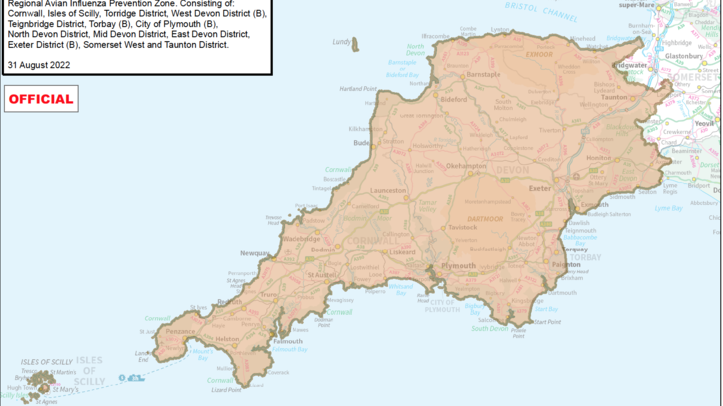
The government has declared an Avian Influenza Prevention Zone (AIPZ) in the South West of England following a number of new detections of bird flu in poultry, as well as wild and captive birds in the region.

The affected area covers Devon, Cornwall (including the Isles of Scilly) and parts of Western Somerset. From midday today (August 31), it is now a legal requirement for all bird keepers in in these counties to follow strict biosecurity measures to mitigate the risk of further outbreaks of disease occurring. The prevention zone will remain in place until further notice.

The UK has in recent months faced its largest ever outbreak of bird flu, with over 130 cases confirmed across the country since late October. The introduction of the AIPZ comes after the disease was detected in captive birds at nine premises across the south-west region since last month, as well as several cases in wild seabirds and increased reports of mass mortality in wild birds.

UK deputy chief veterinary officer Richard Irvine said: “Following a number of detections of avian influenza we have declared an Avian Influenza Prevention Zone across Cornwall, Devon and parts of Somerset. This means that all bird keepers in the region must take action now to both prevent disease getting into flocks and it spreading any further.

“Whether you keep just a few birds or thousands, you are now legally required to introduce higher biosecurity standards on your farm or small holding. It is in your interests to do so in order to protect your birds from this highly infectious disease.”

The UK Health Security Agency continue to advise that the risk to public health from the virus is very low and the Food Standards Agency advice remains unchanged, that avian influenzas pose a very low food safety risk for UK consumers.

The AIPZ means bird keepers in the affected region must:

  • Cleanse and disinfect clothing, footwear, equipment and vehicles before and after contact with poultry and captive birds – if practical, use disposable protective clothing.
  • Reduce the movement of people, vehicles or equipment to and from areas where poultry and captive birds are kept, to minimise contamination from manure, slurry and other products, and use effective vermin control.
  • Thoroughly cleanse and disinfect housing on a continuous basis.
  • keep fresh disinfectant at the right concentration at all farm and poultry housing entry and exit points.
  • Minimise direct and indirect contact between poultry and captive birds and wild birds, including making sure all feed and water is not accessible to wild birds.
  • Prevent access by poultry to ponds and watercourses and ensure that birds are kept in fenced or enclosed areas.

Poultry keepers and members of the public should report dead wild birds to Defra’s national dead wild bird helpline on 03459 33 55 77 and keepers should report suspicion of disease in their birds to APHA on 03000 200 301.

Previous ArticleNew Orijen cat feeding lines available in the UK
Next Article Pet grooming school offers retraining to former armed forces personnel
David Rees

David Rees is the editor of PBW News. In a 30-year career in trade journalism he has specialised in the retail and wholesale sectors, holding senior positions at a number of leading titles.

Read Similar Stories

Legislation

PIF welcomes food safety guidance about raw food

February 11, 2026
Legislation

Government seeks to reform vet sector

January 30, 2026
Legislation

Steep rise in under-20s minimum wage announced

November 27, 2025
Most Read

New treats line to support retired police dogs

March 4, 2026

Pets to take their place in Italian design showcase

March 4, 2026

Natural VetCare brand relaunched in UK

March 2, 2026
© 2026 Lewis Business Media. All Rights Reserved.
Lewis Business Media, Suite A, Arun House, Office Village, River Way, Uckfield, TN22 1SL

Privacy Policy | Cookie Policy | Terms & Conditions

  • OvertheCounter
  • Pest Magazine

Type above and press Enter to search. Press Esc to cancel.

Pet Business World
Managing Your Privacy

To provide the best digital experience, we use cookies to store and/or access device information. Consenting to our use of cookies allows us to process data such as reading behaviour. Not consenting or withdrawing consent, may adversely affect certain features and functions.

Functional Always active
The technical storage or access is strictly necessary for the legitimate purpose of enabling the use of a specific service explicitly requested by the subscriber or user, or for the sole purpose of carrying out the transmission of a communication over an electronic communications network.
Preferences
The technical storage or access is necessary for the legitimate purpose of storing preferences that are not requested by the subscriber or user.
Statistics
The technical storage or access that is used exclusively for statistical purposes. The technical storage or access that is used exclusively for anonymous statistical purposes. Without a subpoena, voluntary compliance on the part of your Internet Service Provider, or additional records from a third party, information stored or retrieved for this purpose alone cannot usually be used to identify you.
Marketing
The technical storage or access is required to create user profiles to send advertising, or to track the user on a website or across several websites for similar marketing purposes.
  • Manage options
  • Manage services
  • Manage {vendor_count} vendors
  • Read more about these purposes
Cookie Preferences
  • {title}
  • {title}
  • {title}