Pet lovers may choose to swap their furry, four-legged friend for something a little less cuddly if they want to help save the planet.
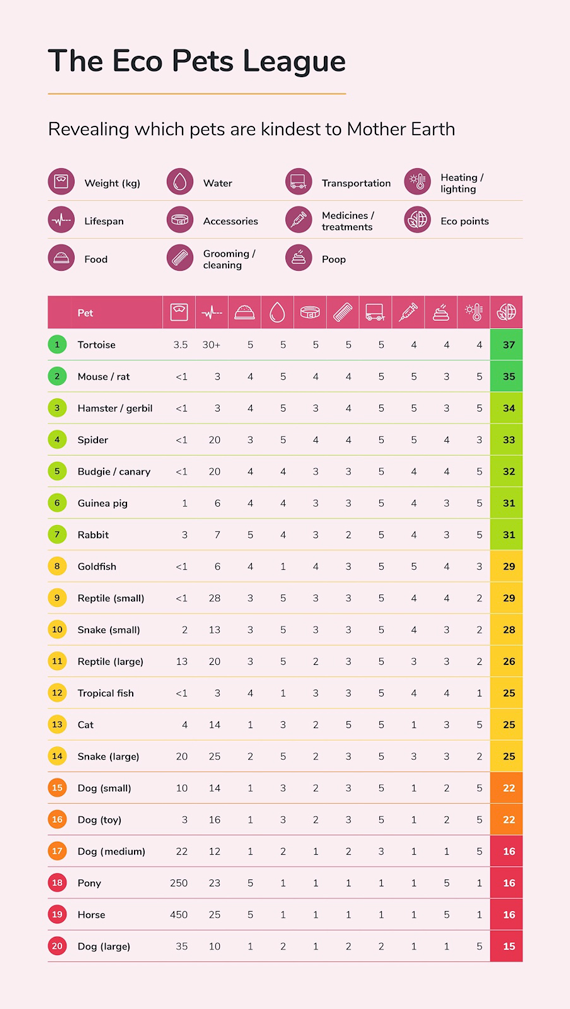
New research by money.co.uk has revealed the most and least eco-friendly pets, with tortoises and exotic pets winning the race, while cats and dogs are among the worst offenders when it comes to damaging the environment.
With around 12 million dogs in the UK and a similar number of cats, they are the most popular pets by far for the majority of households. In spite of this popularity they both scored poorly in the money.co.uk Eco Pets League and the researchers believe the study could point to a trend for future pet ownership as we become more environmentally aware.
COMPANIONS OF CHOICE
That means future generations of UK families could opt to own a tortoise or small mammal as their companion animal of choice.
The study looked at the impact each species of pet has on the environment by scoring them across eight different factors.
Energy experts at money.co.uk looked at each animal’s diet, water consumption, what sort of accessories they tended to need and whether chemicals were used in their grooming or cleaning.
They also examined each pet’s likely energy usage based on whether they required powered lamps, heaters or filers, in addition to examining their possible transportation impact and if they were likely to require pharmaceutical treatments.
Finally, they looked at the waste produced by each species of pet and how toxic that was likely to be on the environment.
ECO POINTS
Each pet was then awarded eco points with a maximum five points in each of the eight categories.
In the diet category pets that are mainly fed meat, including dogs and cats, have a greater impact due to the nature of meat cultivation so they were awarded just one point. Vegetarian pets that eat a largely unprocessed diet were awarded the full five points.
In the transport category large pets requiring lots of exercise and who were likely to impact their owner’s choice of vehicle were awarded the fewest points.
When assessing the waste produced by each pet, the researchers also considered if there could be any environmental benefits, such as in the case of horse and pony manure, which can be used as fertiliser.
When the eco scores from each category were added up, the pets were ranked in a league table and any ties were decided on the pet’s lifespan, which placed shorter living pets above a longer living animal on the same point score.
The tortoise came out as a clear winner with a league topping score of 37 eco points out of the maximum 40. Researchers said this was due to its simple vegetarian diet and low need for plastic accessories or impactful treatments.
Small mammals such as mice, rats, hamsters and gerbils were also revealed to be a sound choice when it comes to caring for the environment. These all featured highly in the eco pets league thanks to their simple diet and modest needs.
EXOTIC “PETS
Exotic spiders such as tarantulas also did reasonably well in the study with a higher league place than many more conventional pets thanks to their small size and simple requirements.
Guinea pigs and rabbits are popular pet choices but their larger size meant they require more resources, and produce more waste, than smaller mammals.
Goldfish and tropical fish could only achieve a mid-table ranking despite their small size. The water involved in keeping fish along with the energy required to run filters and heaters and the processed nature of their food meant they lost eco points.
Exotic pets such as reptiles and snakes performed reasonably well in the study but larger species tended to use more energy and have a greater environmental impact than smaller examples.
RETHINK “RELATIONSHIPS
Ben Gallizzi, energy expert at money.co.uk said: “Britain is a nation of pet lovers, but if we’re to tackle the earth’s climate crisis we may need to rethink our relationships with animals.
“Cats and dogs are hugely popular but their red meat diet, along with several other factors, means they have a huge impact on the environment, particularly as there are more than 20 million of them in the UK.
“This research shows that there are more eco-friendly pet choices for those who want to minimise their impact on the environment.
“While a tortoise may not be quite as cuddly as a Labrador, its veggie diet and slow metabolism means it is far kinder to the planet.
“Future generations of Britons may have to adapt to become less of a nation of cat and dog lovers and more a nation of tortoise lovers.”