


Close Menu
Pet Business World
  • Trade News
    • Distributors
    • International
    • Legislation
    • Manufacturers
    • Other trades
    • Retailers
  • New Products
    • Birds
    • Cats
    • Dogs
    • Small Animals
  • Features
    • Industry Experts
    • Retailer profiles
  • Aquatics
  • Columnists
    • Newshound
    • Reptile Trade Views
  • People
  • Magazines
    • March 2025
    • February 2025
    • January 2025
    • December 2024
    • November 2024
    • October 2024
  • Classifieds
  • Trade Directory
  • Advertise
  • Email Newsletters
  • Subscribe
Facebook X (Twitter)
  • FREE Email Newsletters
  • About Us
  • Advertise
  • Contact Us
  • Free Magazine Subscriptions
X (Twitter) Facebook
Pet Business World
  • Trade News
    • Distributors
    • International
    • Legislation
    • Manufacturers
    • Other trades
    • Retailers
  • New Products
    • Birds
    • Cats
    • Dogs
    • Small Animals
  • Features
    • Industry Experts
    • Retailer profiles
  • Aquatics
  • Columnists
    • Newshound
    • Reptile Trade Views
  • People
  • Magazines
    1. March 2026
    2. February 2026
    3. January 2026
    4. December 2025
    5. November 2025
    6. October 2025
    7. September 2025
    Featured

    PBW News – March 2026

    By David ReesMarch 10, 2026
    Recent

    PBW News – March 2026

    March 10, 2026

    PBW News – February 2026

    February 10, 2026

    PBW News – January 2026

    January 12, 2026
  • Classifieds
  • Trade Directory
Pet Business World
Other trades

What’s up doc?

Rachel WoodBy Rachel WoodOctober 9, 20193 Mins Read
Facebook Twitter LinkedIn Email
Share
Facebook Twitter LinkedIn Email

width="570"

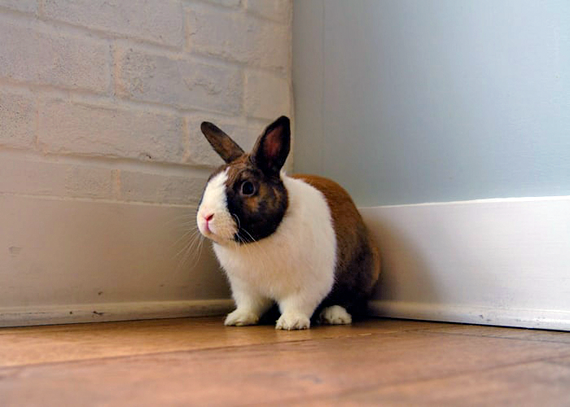
The most common medical issues and causes of death in pet rabbits have been identified for the first time by academics from the Royal Veterinary College.

A new study, carried out as part of the RVC’s VetCompass programme, gives a much better picture of what needs to be done to keep the species, a popular pet among adults and children, healthy.

After collecting data from 6,349 rabbits that attended 107 veterinary clinics across the UK, the researchers found that the most common causes of death recorded by vets are flystrike (10.9% of pet rabbits), anorexia (4.9%), collapse (4.9%) and gut stasis (4.3%). The study also revealed the average lifespan of pet rabbits was just 4.3 years, although survival up to 14.4 years has been recorded. Male rabbits tend to live longer at 5.2 years on average compared to the 3.7 years females live on average.

INNAPROPRIATE

Meanwhile, the most common medical issues are overgrown nails (16%), overgrown molars (7.6%), dirty bums (4.5%), overgrown incisors (4.3%) and gut stasis (4.2%). Many of these problems are associated with inappropriate housing or feeding.

However, the fact rabbits evolved as a prey species has not helped owners and vets. Evolution has meant rabbits can disguise external signs of disease so that they are less likely to be targeted by predators – which makes it harder for owners to spot that their rabbit is ill until it is often too late.

Other key findings by the researchers include:
> Male rabbits are more likely than females to have overgrown claws, overgrown molars, overgrown incisors and dental disease
> The average age of pet rabbits presented to vets is 3.2 years in this country
> The average adult bodyweight of rabbits presented to vets is 2.1kg

Dr Dan O’Neill, VetCompass researcher and senior lecturer at the RVC, said: “For years, rabbits were considered as the perfect child’s pet: fluffy, cute, passive and only needing minimal care and handling while being fed muesli-type food in a hutch in the garden where it was generally kept on its own.

“We now know that this level of care is completely unacceptable from a welfare perspective.

SUFFERING

“This new paper can further improve the lives of rabbits by helping owners and vets to recognise the common health problems of rabbits and, therefore, to prioritise the key management factors that will make our rabbits even healthier. Rabbits don’t exhibit their suffering like other species so it behoves all of us to be prevent and recognise their problems.”

Dr Jo Hedley, VetCompass researcher and lecturer at the RVC, added: “Unfortunately, due to the rabbit’s ability to hide disease, signs of a problem are often non-specific and recognised far too late, hence the causes of death recorded are in fact often just end-stage symptoms of underlying disease.

“Many of the key medical issues are still problems that we should be able to completely prevent by appropriate husbandry, diet and health checks. Better owner education is necessary if we are to improve rabbit health and welfare in future years.”

Previous ArticleBusinesses pair up for charity
Next Article Major businesses book for PATS 2020
Rachel Wood

Rachel Wood, graphic designer. More than 40 years ago, I was one of the first females to be offered an apprenticeship within the printing industry. I've worked on record sleeves, DVD covers and various magazines throughout my career. In my spare time I collect movie posters and attend comic cons, I keep fit (and sane) with gardening and strength & conditioning training.

Read Similar Stories

Other trades

Clumber Spaniel Bruin takes top spot at Crufts

March 9, 2026
Other trades

Experts uncover why cats are prone to kidney disease

March 6, 2026
Other trades

Scottish vet group becomes employee-owned

March 6, 2026
Most Read

Pets at Home to open four new outlets this month

March 12, 2026

Bella+Duke teams up with James Martin

March 12, 2026

PATS New Product Awards programme to be expanded

March 12, 2026
© 2026 Lewis Business Media. All Rights Reserved.
Lewis Business Media, Suite A, Arun House, Office Village, River Way, Uckfield, TN22 1SL

Privacy Policy | Cookie Policy | Terms & Conditions

  • OvertheCounter
  • Pest Magazine

Type above and press Enter to search. Press Esc to cancel.

Pet Business World
Managing Your Privacy

To provide the best digital experience, we use cookies to store and/or access device information. Consenting to our use of cookies allows us to process data such as reading behaviour. Not consenting or withdrawing consent, may adversely affect certain features and functions.

Functional Always active
The technical storage or access is strictly necessary for the legitimate purpose of enabling the use of a specific service explicitly requested by the subscriber or user, or for the sole purpose of carrying out the transmission of a communication over an electronic communications network.
Preferences
The technical storage or access is necessary for the legitimate purpose of storing preferences that are not requested by the subscriber or user.
Statistics
The technical storage or access that is used exclusively for statistical purposes. The technical storage or access that is used exclusively for anonymous statistical purposes. Without a subpoena, voluntary compliance on the part of your Internet Service Provider, or additional records from a third party, information stored or retrieved for this purpose alone cannot usually be used to identify you.
Marketing
The technical storage or access is required to create user profiles to send advertising, or to track the user on a website or across several websites for similar marketing purposes.
  • Manage options
  • Manage services
  • Manage {vendor_count} vendors
  • Read more about these purposes
Cookie Preferences
  • {title}
  • {title}
  • {title}