
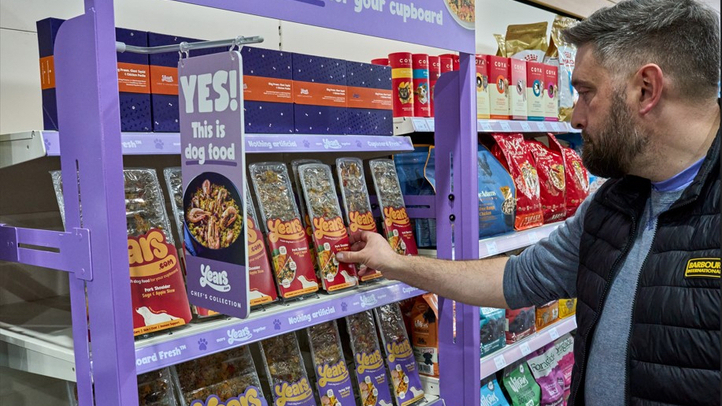
Pet food brand Years has concluded an internal investigation and found no evidence of contamination in its food, but many dog owners remain unconvinced.
The brand initiated a voluntary product recall of its meals in August, following a spike in reported cases of sudden bilateral dry eye in customers’ pets. Years began investigating on July 22, 2026, after receiving 11 reports of potential sudden bilateral dry eye, with a precautionary, voluntary recall issued on August 17, 2026 following an increase to 57 potential cases, the company reported.
The recall followed an earlier recipe change that saw buckwheat introduced into the formulation, so the ingredient and its supply chain formed the initial focus of the investigation. However, Years broadened the investigation to cover 21,757 individual tests across 1,129 distinct substances, including individual ingredients, retained meals at the manufacturing facility, and meals returned by customers, and found “no evidence of contamination, toxin or safety issue” with Years’ food, ingredients or packaging.
Buckwheat was extensively tested, and the investigation found no evidence of contamination from any potentially dangerous substances such as tropane alkaloids, fagopyrin, mycotoxins, pesticides, sulphonamides or heavy metals.
Independent case data, provided by the British Association of Veterinary Ophthalmologists (BrAVO) identified 155 cases of sudden bilateral dry eye in Years-fed dogs, but also a further 96 cases that have never historically been fed Years, including 55 cases in Finland and Hungary where Years’ food is neither sold nor consumed. In both Finland and Hungary, dry and wet dog foods containing buckwheat were present in a significant number of affected dogs’ diets, at a prevalence higher than buckwheat’s overall market share.
Following the conclusion of its investigation, Years has decided to resume production and distribution of its meals, and to restart subscriptions from next month, but to revert to its earlier recipe formulation without the buckwheat ingredient.
Darren Beale and Ivan Barashki, co-founders of Years, said: “After extensive independent laboratory tests and two separate manufacturing reviews by independent experts, no contamination, toxin, safety or packaging migration issue has been found in Years food, and no link has been identified between Years food and sudden bilateral dry eye.
“We know this conclusion may not feel like a resolution if you’re caring for a dog with sudden bilateral dry eye. We see how hard this has been. These findings don’t change that, nor do they answer the wider question of what is causing this unusual pattern of cases, which is also impacting dogs that were never fed our food, both in the UK and internationally. Whilst we have completed our investigation, we still want to help find those answers, which is why we’ll keep sharing our findings with BrAVO and other independent bodies for as long as it takes.
“For us, and for our customers, the investigation provides important reassurance about the safety of our fresh food, and we look forward to serving customers again in October with our buckwheat-free recipe.”
However, many former customers of the company remain unconvinced by the outcome of Years’ investigation.
A Facebook group entitled ‘Years Dry Eye Cases’ has more than 5,200 members and hundreds of posts relating to severe eye discomfort among pets and tales of repeated visits to the vets for monitoring and treatment.
One of the group’s administrators, Andy Young, told PBW News: “I welcome the fact that we finally have some information from More Years Limited. That said, I think I can safely say, gauging the response in the Facebook Group, that we remain entirely unhappy with the situation.
“In essence, the report is suggesting that buckwheat is the issue and that it is likely to be a previously unrealised cause of eye problems in some dogs, but Years believe it is the job of others to take this forward and find the cause.
“We are disappointed that this report is issued just in time for the company to restart their subscription, minus the buckwheat!”
Affected owners have been requested by Years to submit veterinary and care costs and related information to a loss adjuster Crawford & Co, which will complete its own enquiries in respect of any potential legal and insurance policy liability.
Years has also pledged to fund an independent study, led by David Williams, Veterinary Ophthalmologist and PhD in Ocular Immunology at the Queen’s Veterinary School Hospital, Cambridge, to explore whether an underlying cause to sudden bilateral dry eye can be identified.