
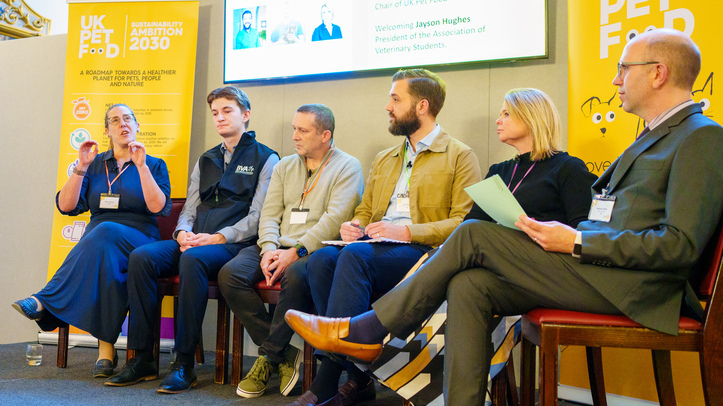
The needs of young pet owners, the role of Artificial Intelligence and the future role of the pet food industry were all under discussion at a forward-looking annual convention staged by trade body UK Pet Food last month.
Tasmin Sibbald, chief operating officer at Vypr, revealed fresh consumer insight gleaned from the research company’s panel of 1,000 adult consumers.
When panellists were asked what they wanted for the future in pet care, the answers varied significantly by age group, she explained.
While for older consumers, pet ownership is about stability and comfort, for younger consumers (aged 18-24) it is much more about the emotional stimulus and the experience of looking after a companion animal.
Price and affordability are the most important criteria for younger pet owners, the panel data revealed, but next on the list is health, and young consumers are prepared to pay more for products that deliver this as a benefit. Similarly, functional products are making strong headway in the human food sector and younger consumers in particular are expecting similar products to be available for pets.
Younger consumers also have an expectation that technology will help them with their pet ownership, with 35% of them already using nutritional or feeding apps. This age group is also searching for ideas on platforms such as TikTok and YouTube, and is particularly interested in health and functional ingredients, sustainability and personalised, data-led nutrition.
In general terms, says Sibbald: “Young pet owners don’t want to be lectured to, they want to be empowered and supported.”
More than half of this younger age group don’t believe that pet food is innovating quickly enough, she added. “Young consumers want NPD that meets their needs and works for them at their pace.”
In a separate presentation, Simon Ellis, head of AI Transformation at retailer Pets at Home, told delegates that “Artificial Intelligence (AI) is reshaping pet food and pet care.”
He pointed out that $4.2bn was spent globally on developing AI in the pet care sector in 2021, and that figure is expected to rise to $17bn by the year 2030.
The capability is already being used extensively in the trade he explained, ranging from personalised kibble recipes delivered direct to consumers’ homes to apps that scan eyes, teeth and even excrement to help give owners early warning of illness.
“These tools can catch illnesses before any symptoms are showing, meaning that we are moving from a reactive mode to a proactive and predictive one,” he explained. “For example, obesity rates could plummet if the industry can deliver personalised portion sizes too.”
AI is also widely in use at Vets’ practices too, Ellis continued, through functions such as digital scribes, appointment booking, and suggested diagnosis and treatment options. Some AI models have already successfully passed all veterinary exams, he revealed, but added “The vet is always in the room, and the clinician should always have the final say.”